Signs It's Time to Replace Your Pool Liner
A vinyl pool liner does far more work than most homeowners realize. It holds thousands of gallons of water in place, protects the walls and floor of your pool from moisture damage, and gives your backyard oasis its signature look. Because it sits beneath the water's surface day after day, though, it's easy to take for granted until something goes wrong.
Like any material exposed to sunlight, chemicals, and shifting temperatures, vinyl eventually wears out. Many liners last around a decade, while others fail sooner because of poor water chemistry, harsh winters, or improper installation. Catching the warning signs early can save you from costly water loss, structural damage, and a summer spent looking at your pool instead of swimming in it.
This guide covers the most common signs that your liner has reached the end of its useful life, and it explains why partnering with an experienced pool company makes all the difference when it's time for a replacement.
Water Levels That Keep Dropping
Some water loss is completely normal. Evaporation, splashing, and backwashing all lower your water level over the course of a swim season. However, if you find yourself topping off your pool far more often than usual, a leak in the liner may be to blame.
Small punctures and separated seams can let water escape slowly, often without any visible puddles around the pool. Over time, that escaping water can wash out the sand or soil beneath the pool floor, erode the base, and even compromise the walls. You may also notice higher water bills or soggy patches of lawn near the pool.
A simple bucket test can help you tell the difference between evaporation and a leak. Place a bucket filled with pool water on the pool steps, mark the water line inside the bucket and on the pool wall, and compare the two after 24 hours. If the pool loses noticeably more water than the bucket, it's time to call a pool company for a professional inspection. Trained technicians can pinpoint the source and determine whether a patch will hold or whether a full replacement is the smarter long-term fix.
Tears That Continue to Spread
Tiny rips and cracks in vinyl rarely stay tiny. Every time the water shifts, someone brushes against the wall, or temperatures swing between hot afternoons and cool nights, the stress on a weakened area increases. What starts as a pinhole can grow into a long tear surprisingly quickly.
Patch kits can offer a temporary solution for one or two small holes, but they aren't meant to hold together a liner that is failing in multiple places. If you're applying patch after patch, or if the vinyl feels brittle and cracks when touched, the material itself has likely broken down. At that point, continuing to patch is a bit like putting tape on a worn-out tire.
A reputable pool company will assess the overall condition of the vinyl rather than just the damaged spot. That big-picture evaluation helps you avoid pouring money into repairs that only delay the inevitable.
Wrinkles That Won't Smooth Out
A properly fitted liner should lie smooth and snug against the pool floor and walls. When wrinkles begin to appear, they often signal that the vinyl has lost its elasticity or that water chemistry problems have caused it to stretch and absorb moisture.
Wrinkles aren't just a cosmetic nuisance. They collect dirt and algae, make cleaning more difficult, and create weak points where the vinyl can fold and eventually tear. They can also become tripping hazards on the pool floor, especially for children who love to run and play in the shallow end.
In some cases, wrinkles form because the liner was never sized correctly in the first place. This is one of the clearest reasons to hire a qualified pool company for replacement. A custom-fit liner measured precisely to your pool's dimensions greatly reduces the chance of wrinkling, sagging, or stretching down the road.
Colors That Have Faded Away
Sunlight and pool chemicals take a toll on vinyl over the years. A liner that once looked vibrant and inviting can gradually turn pale, patchy, or chalky. While fading on its own doesn't necessarily mean your liner will leak tomorrow, it often indicates that the vinyl has aged and may be growing thin and brittle.
Fading also affects how your entire backyard looks and feels. Your pool is often the centerpiece of your outdoor space, and a dull, washed-out liner can make even a well-maintained pool look neglected. That matters for more than just your own enjoyment. According to RubyHome, an online real estate resource, adding a swimming pool can boost a home's value by up to 7%. A worn liner can undercut that value, while a fresh one helps your pool look its best for guests and potential buyers alike.
The good news is that replacement gives you an opportunity to refresh your style. Many homeowners are surprised by the wide range of colors and patterns available today. An experienced pool company can walk you through the options and help you choose a design that complements your home, landscaping, and personal taste.
Stains That Refuse to Disappear
Every pool owner deals with the occasional stain from leaves, metals, or algae. Usually, a good brushing and a few adjustments to water chemistry take care of the problem. When stains keep coming back or won't budge despite your best efforts, though, the vinyl itself may be the culprit.
As liners age, their surfaces can become porous and rough. Those tiny imperfections give dirt, minerals, and algae a place to cling, which makes stains harder to remove and quicker to return. Scrubbing aggressively might seem like the answer, but it can actually wear down aging vinyl even further.
Rather than fighting a losing battle with brushes and chemicals, consider having a pool company evaluate the liner. If the surface has deteriorated, a replacement will restore a clean, smooth finish and make routine maintenance far easier.
Liners That Slip Out of Place
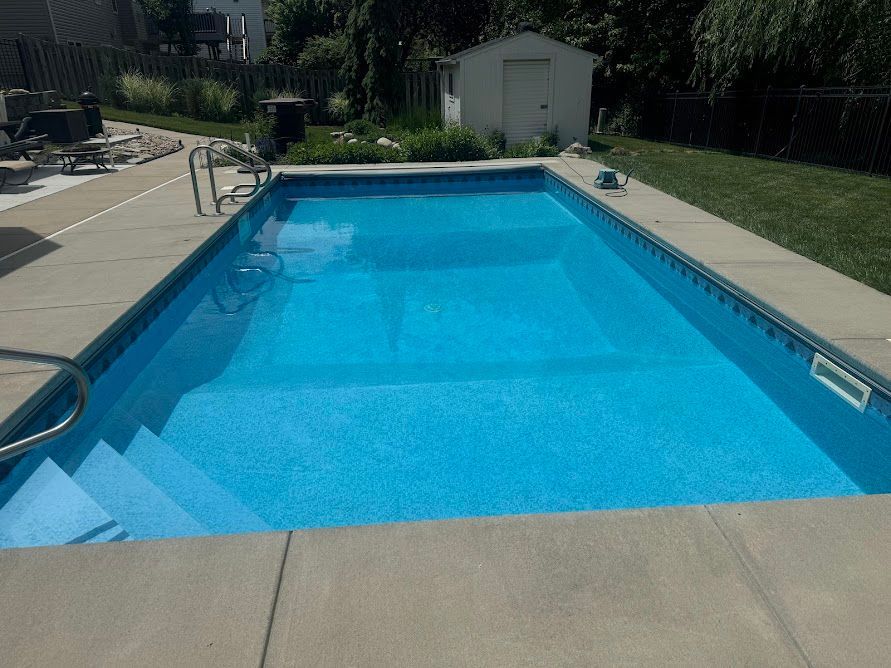
Your liner is designed to stay securely locked into a track along the top of the pool wall. When vinyl shrinks, loses elasticity, or becomes brittle, it can begin pulling away from that track. You might notice sections of the liner hanging loose near the coping or gaps forming along the edge of the pool.
A slipping liner is a serious problem. Once the vinyl pulls free, water can get behind it and into the pool walls, leading to rust, rot, or erosion depending on your pool's construction. Trying to force a shrunken liner back into place yourself can cause it to tear, making the situation even worse.
This is a job best left to professionals. A skilled pool company can determine whether the liner can be safely reset or whether replacement is the only reliable option. Professional installation also ensures that your new liner is seated correctly from the start, which improves water retention and protects the rest of your pool's structure.
A worn vinyl liner can show its age through tears, fading, wrinkles, or chalky discoloration. If you’re noticing any of these signs, it may be time for a replacement. A professional inspection can confirm whether a repair will hold or if a new liner is the smarter long-term solution.
Acapulco Pool and Spa LLC provides custom-fit liners, high-quality materials, expert installation, and flexible financing to make upgrading simple. Contact Acapulco Pool and Spa LLC today to schedule your consultation.


Share On: